
Last updated November 23, 2026
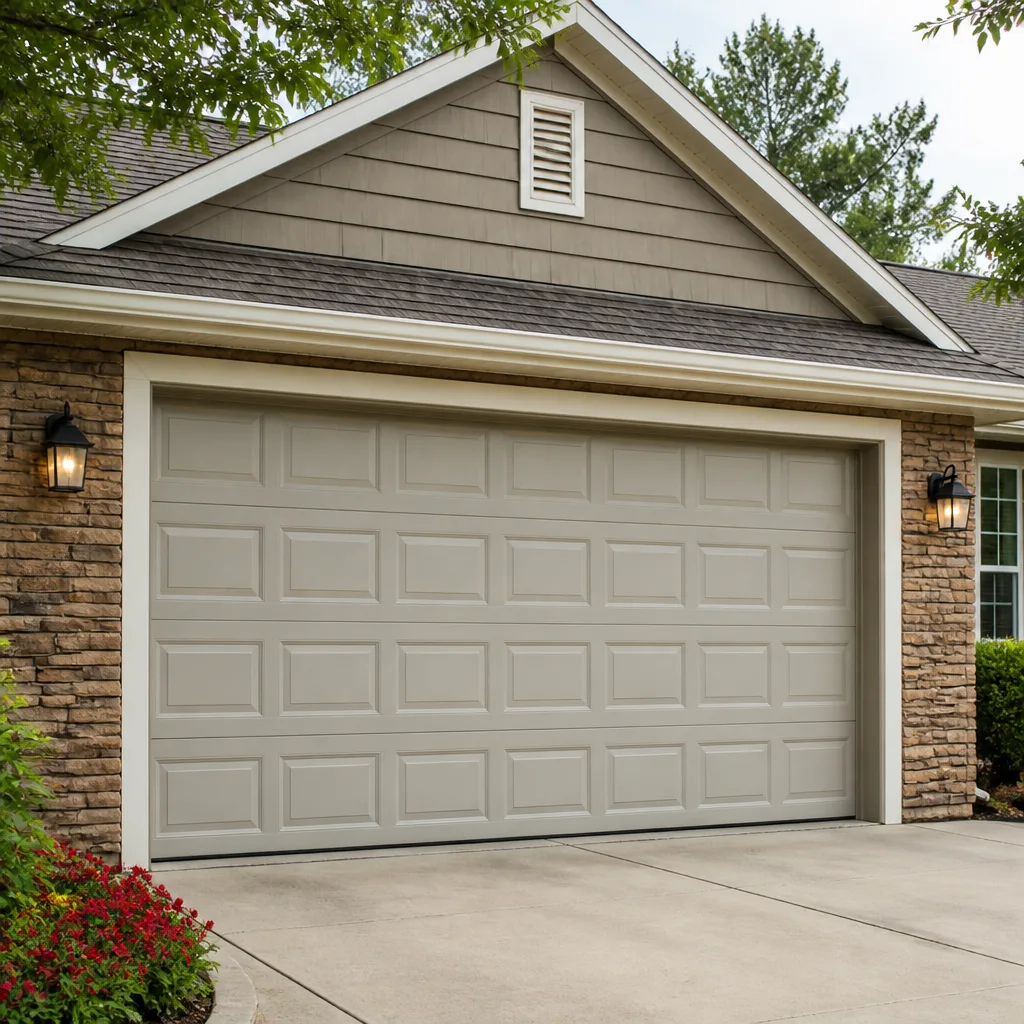 Raised-panel steel
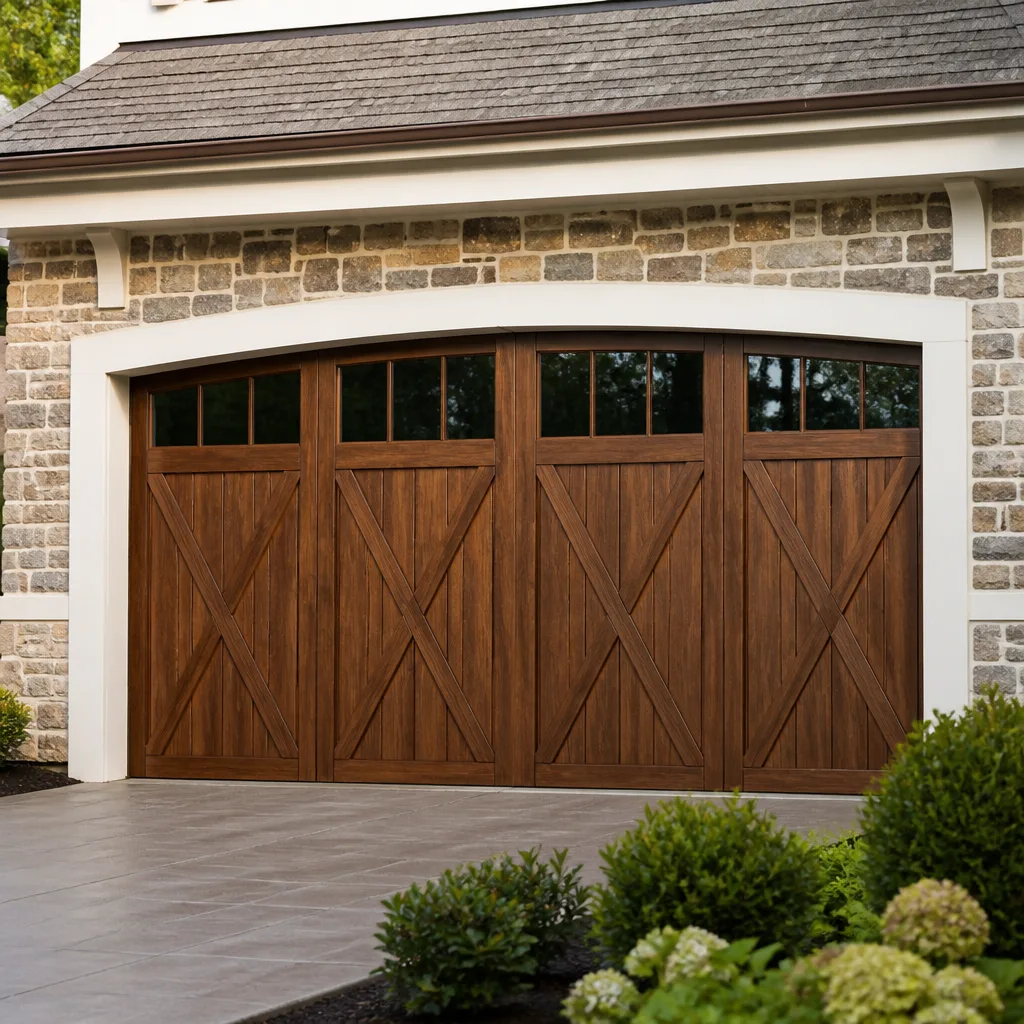 Carriage house
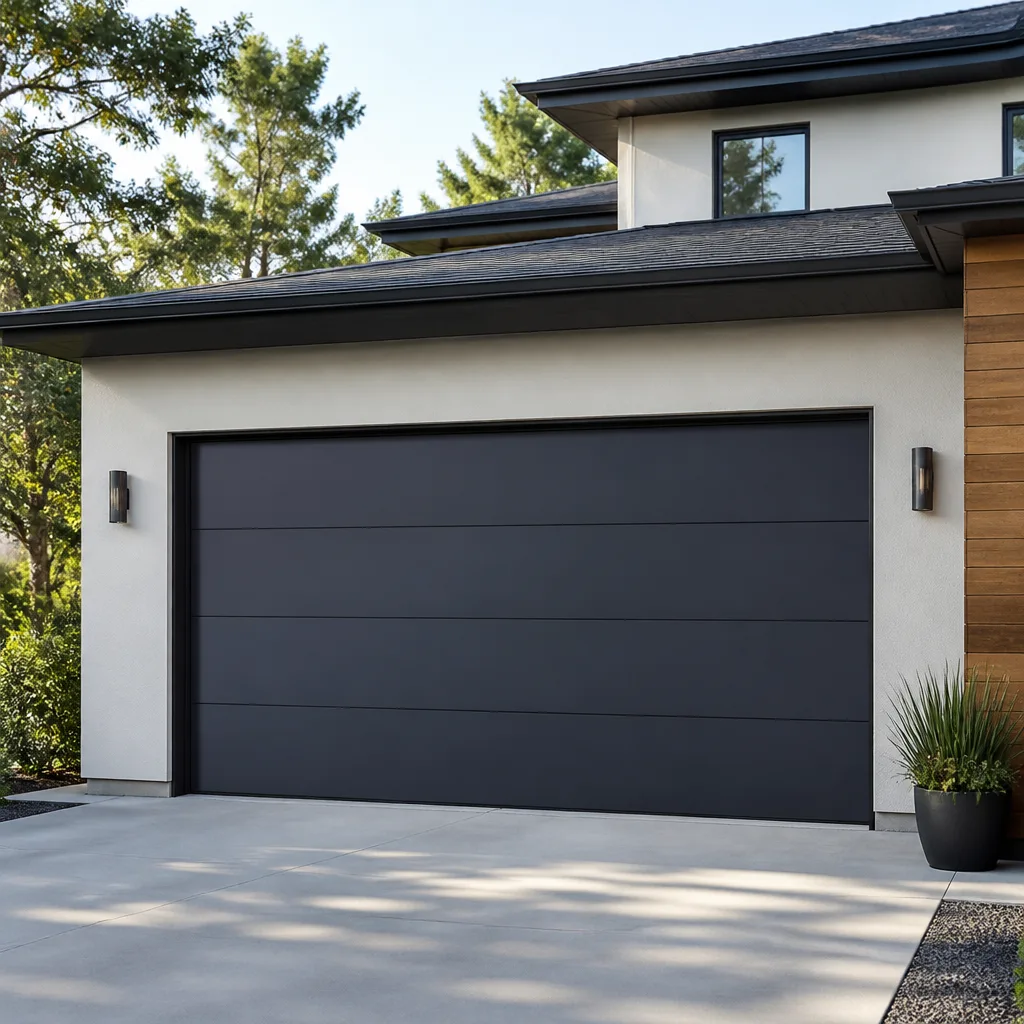 Modern flush
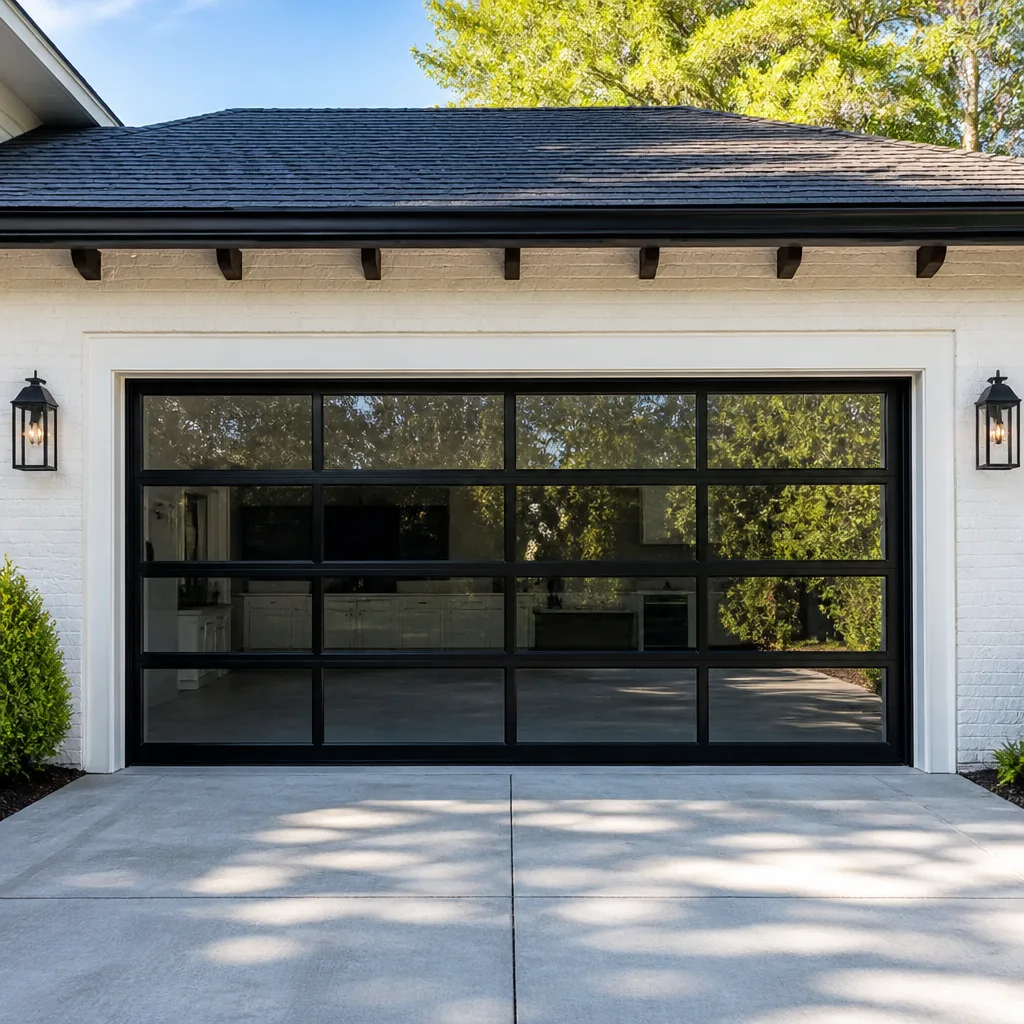 Full-view glass
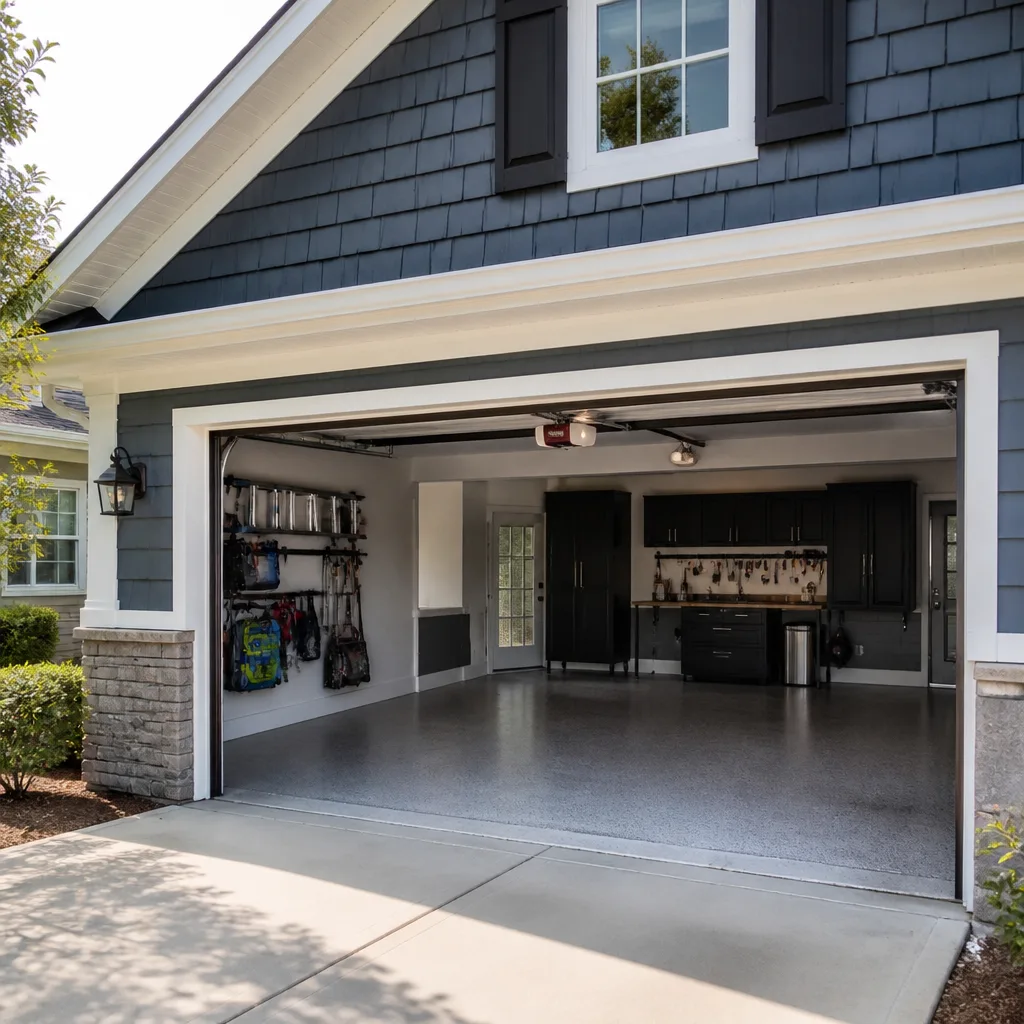 LiftMaster openers
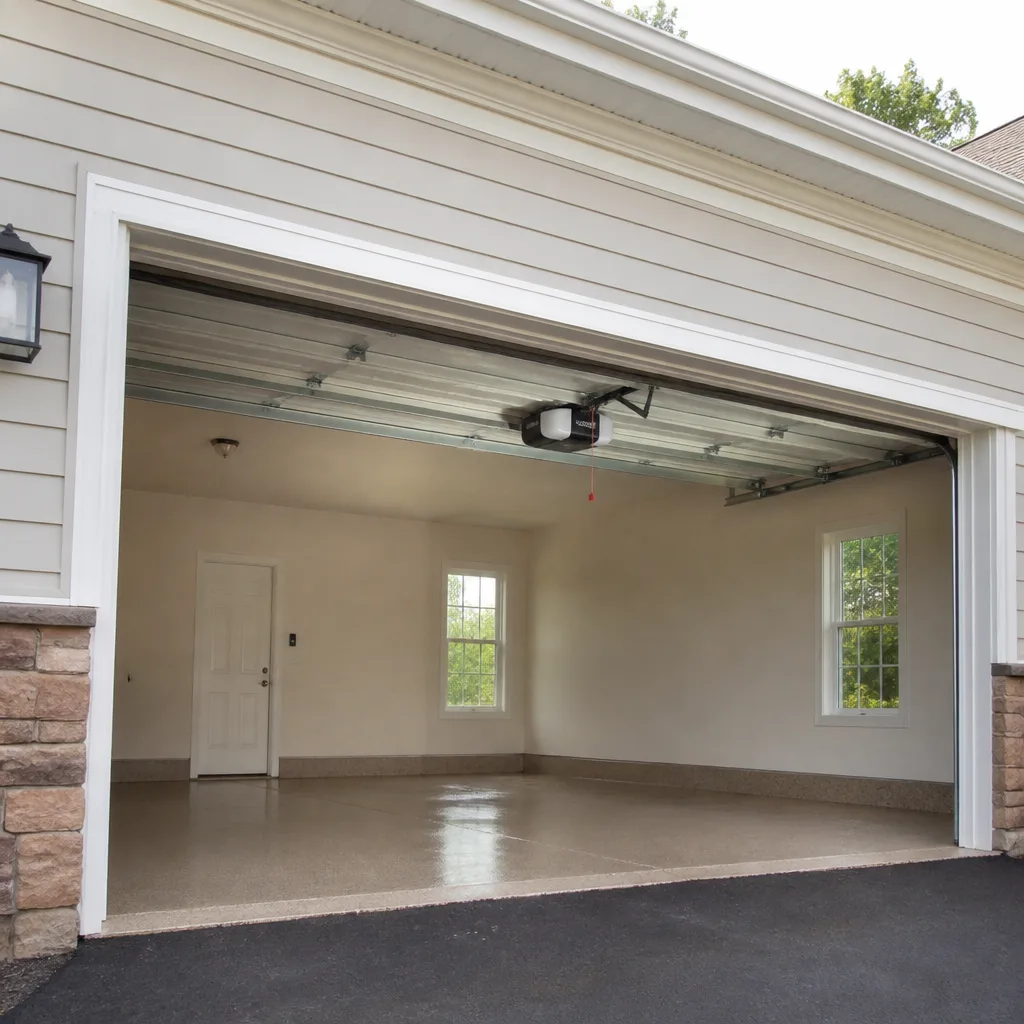 Chamberlain openers
Full 25-point door and opener safety check with every visit - springs, cables, rollers, tracks, and your LiftMaster or Chamberlain opener included
You get a price before we start. It does not change when the pro arrives.
Get your free estimateGarage Door Warning Signs: A New Brunswick Homeowner’s Reference Guide
Most garage door failures don’t arrive without notice. They announce themselves for weeks, sometimes months, in ways that are easy to dismiss. A door that runs a little loud. A short pause before the motor engages. A faint wobble at the halfway point. Homeowners tend to wait for something dramatic – a snapped cable, a door stuck open in the rain – before they call anyone. In our experience, the door has usually been sending quieter signals long before that moment. The trick is knowing what you’re hearing and seeing, and understanding which signals mean “watch this” versus “stop using the door.” This guide walks you through the audio, visual, and mechanical tells that New Brunswick homeowners can use to read their door before a small issue becomes an expensive one. We’ll cover noise diagnostics, opener behavior, the difference between slow and unsafe, and how to describe what you’re noticing so the first service visit actually fixes the problem.
Quick Answer
Garage door warning signs fall into three categories: sounds (grinding, popping, scraping), sights (frayed cables, worn rollers, track gaps, panel separation), and behavior (opener strain, sensor misalignment, uneven travel). Any grinding, popping, or sudden change in how the door moves is a signal worth acting on. Cables that look frayed, doors that hang unevenly, or panels that have separated from the frame are immediate-service items. A door that’s simply a bit slower than it used to be is often the earliest sign of declining spring tension.
Styles & brands we work with
- Raised-panel steel
- Carriage house
- Modern flush
- Full-view glass
- LiftMaster openers
- Chamberlain openers
Table of Contents
- What Your Garage Door’s Noises Are Telling You
- Visual Warning Signs You Can Spot Yourself
- Opener Behavior: When the Motor Is Talking, Listen
- A Little Slow vs. Unsafe to Operate
- How New Brunswick’s Seasons Affect Your Door
- How to Document and Describe What You’re Hearing
- When to Repair and When to Replace
- Common Mistakes to Avoid
What Your Garage Door’s Noises Are Telling You
Sound is the most underrated diagnostic tool a homeowner has. Garage doors make noise by design, and the baseline noise your door makes on a normal day is your reference point. When something changes – pitch, rhythm, volume, or where in the cycle it happens – that change is data. Over years of working on doors across New Brunswick, we’ve learned to map specific sounds to specific components. Here’s the cheat sheet.
- Grinding: Usually rollers, hinges, or the torsion tube. Rollers wear flat spots and grind against the track. Hinges lose lubrication and squeal into a grind. A dry torsion tube grinds at every cycle.
- Popping: Often a torsion spring slipping, a cable jumping a drum, or a roller climbing out of the track briefly. Popping gets worse as the underlying issue progresses.
- Scraping: Metal-on-metal contact. Either the door panel is dragging on the frame, the bottom seal is catching on the floor, or a track has bent inward and is pinching the roller.
- Rattling: Loose bolts, worn hinges, or a panel that’s lost its fastening at a stile. Rattles usually point to hardware slack rather than a mechanical failure.
- Banging: The door slamming down instead of lowering under controlled tension. This points at spring or cable problems and should be treated as a stop-use signal.
Anything that sounds like a snap, crack, or bang gets the door parked. Springs are the most mechanically dangerous component on a garage door and they don’t announce a failure politely. If you hear a pop and the door won’t lift, do not keep hitting the opener button.
Visual Warning Signs You Can Spot Yourself
Some warnings are visible from the floor of the garage without any tools. Learning where to look takes two minutes and can save you a much bigger repair down the line. Walk around the closed door, then open it halfway from the outside and look again.
- Cables. Look at the steel cables running along each side. A healthy cable is smooth and tight. Fraying, kinks, or a cable that’s coming off the drum is an immediate stop-use item.
- Rollers. Check the little wheels that ride in the track. A smooth roller looks even. Worn rollers are flat on one side, chipped, or visibly wobbling as the door moves.
- Panels. With the door closed, sight along the bottom edge. Gaps or misalignment between panels mean the door is out of square or a hinge is giving way.
- Track. Run your eye down each track from floor to ceiling. Dents, bends, or gaps where the door gets tight are all signs the door is fighting the track.
- Hinges and bolts. Loose bolts and hinges that look bent or rusted point to a door that needs tightening, not just lubrication.
- The bottom seal. A seal that’s chewed up or hanging loose is dragging, and dragging wears out the opener motor faster.
If any of these turn up, it doesn’t mean the door is about to fail today – but it does mean the door is overdue for garage door repair, and the longer the door runs on worn parts, the more gets replaced in the end.
Opener Behavior: When the Motor Is Talking, Listen
The opener is the part of the system that most often gives the earliest and clearest warnings – if you know what you’re watching for. A healthy opener runs at a steady cadence, opens and closes the door without visible effort, and stops cleanly at both ends. A failing one starts to show strain.
Motor strain is the most common early symptom. The door takes a beat longer to start moving after the button is pressed, or it lurches at the halfway point. That’s often the opener working harder to lift a door with declining spring tension or a dragging track. Left alone, strain turns into a burned-out gear or a dead motor.
Logic board issues tend to show up as erratic behavior. The door stops halfway with no obstruction. The drive gear reverses direction for no obvious reason. The light flashes a pattern you can’t find in the manual. If you’re seeing these behaviors on a Craftsman or LiftMaster opener, it’s worth having a technician check the board rather than replacing the whole unit. We’re factory-familiar with the major opener brands including LiftMaster, Chamberlain, Genie, and Craftsman, so we work on the system already on your ceiling rather than pushing a generic swap. For more on opener-specific diagnostics, see our guide to garage door opener repair.
Sensor misalignment is the most common “the door won’t close” issue. Two small lenses at the bottom of each track need to see each other. Cobwebs, dirt, a bumped bracket, or sunlight hitting the sensor at the wrong angle can all break the beam. If the door goes up but won’t come down, check the sensors before anything else.
A Little Slow vs. Unsafe to Operate
This is the single most important distinction in this guide. A slow door and an unsafe door can look similar from the driver’s seat, but the correct response is completely different.
A door is likely safe to keep using, but due to be checked, when:
- The door runs smoothly but noticeably slower than it did a few months ago.
- You hear a light squeak or rattle at a specific spot in the cycle.
- The opener light flickers on a cold morning but everything else is normal.
- The bottom seal leaks a bit of air but the door still closes evenly.
A door is unsafe to operate, and should be parked, when:
- You heard a pop or snap and the door suddenly won’t lift.
- A cable is visibly frayed, kinked, or hanging off the drum.
- The door hangs noticeably crooked when lifted halfway.
- The door comes down fast instead of lowering under tension.
- A panel has separated from the frame, or the door is bent.
- The door shakes violently or comes off the track when the opener runs.
Declining spring tension is the classic case of “slow but on the way to unsafe.” A torsion spring that’s losing its coil doesn’t break the day it starts weakening. It loses tension gradually, so the opener compensates by working harder and the door feels a bit slower. When the spring finally goes, it goes all at once. Garage door spring repair is our specialty, and we treat spring tension as the first thing to measure when a door starts behaving differently. Don’t try to adjust or replace a torsion spring yourself under any circumstances. The stored energy in those coils is enough to cause serious injury, and the correct tools and technique aren’t something to learn on a Saturday job.
How New Brunswick’s Seasons Affect Your Door
Garage doors in New Brunswick see a real range across the year, and the warning signs you’ll notice shift with the seasons. Winter brings hard freeze cycles and fluctuating temperatures, which is when cold-stiffened grease makes doors grind and when spring tension feels tighter than it should. The first hard freeze mornings of the year are a common moment for a marginal spring to finally let go. If your door starts grinding on the first cold snap, don’t assume it will settle back to normal in a week.
Summer’s humidity tends to work on the other end of the system. Wooden door panels swell slightly, which can cause scraping at the frame or a door that no longer seats cleanly on the bottom seal. Steel doors with worn rollers tend to rattle more in the warmer months as tracks expand. Spring and fall are the best windows to schedule a check before the extremes hit.
New Brunswick’s mix of older homes and newer construction around the city also shapes what we see. Older doors – including a lot of Raynor and Wayne Dalton installations – often need hardware attention first, because the original hinges and rollers are decades into their working life. Newer doors tend to show opener strain earlier, especially if a heavy door was paired with an opener that’s just at the edge of its rated capacity. Whether the door is old or new, the same warning signs apply.
How to Document and Describe What You’re Hearing
The single most useful thing you can do before calling for service is to collect the specific behavioral signals your door is giving. A vague “it’s making a weird noise” call often results in a diagnostic visit rather than a fix. A specific description – where in the cycle the noise happens, what it sounds like, when it started, whether it’s tied to weather or time of day – usually lets a technician arrive with the right parts and get the door running again on the first visit.
- Note the point in the cycle. Does the noise happen at the first lift, at the halfway point, at the top of travel, or on closing? Each points to a different part of the system.
- Describe the sound, not the feeling. “A grinding like metal on metal at the left hinge, only on the way up” tells us more than “it feels rough.”
- Check the opener light pattern. Modern LiftMaster and Chamberlain units flash diagnostic codes. Write down the pattern (for example, four flashes, pause, four flashes).
- Note whether it’s weather-linked. Does it only happen on cold mornings? Only when it’s humid? Only after the door hasn’t been used in a few days?
- Photograph anything visible. A photo of a frayed cable or a bent track is worth ten minutes of description.
- Record a short video of the door in motion. Thirty seconds of the door running is the single most useful piece of diagnostic data you can hand a technician.
Bring that information to the first call. It changes a service visit from a diagnosis into a repair. If the opener brand on your door is Genie or Chamberlain, mention that too. Knowing the brand in advance lets our team show up with the right tools and parts.
When to Repair and When to Replace
Plenty of doors that look like they need replacing only need hardware. Plenty of doors that look fine need replacing. The line between the two comes down to how much of the door is still sound.
- Repair is usually the right call when the door structure is sound but one or two components are failing – a bad roller set, a worn hinge, a single broken spring, an opener that needs service. Component-level repair is far cheaper than a new door and usually what the door actually needs.
- Replacement starts to make sense when panels are rusted through, the frame is bent beyond straightening, the door is out of square, or multiple major systems are failing at once. A door that has already had two rounds of major repair in a short window is worth thinking about replacing.
- Safety and access are the deciding factors. If the door can’t be safely operated until it’s replaced, or if it’s failed in a way that’s blocking garage access, the math changes.
Our approach is to give you the honest version at the point of estimate. If repair makes sense, that’s what we’ll write up. If replacement is the real answer, we can handle the full installation in-house. One call covers repair, opener, springs, and full installation – you don’t need to line up a second contractor. All pricing is quoted and agreed before any work starts, so there are no surprises on the invoice.
Common Mistakes to Avoid
- Ignoring a two-second change. A door that used to open cleanly and now hesitates for two seconds is telling you something. The hesitation is almost always accompanied by an underlying issue that gets more expensive the longer you wait.
- Hitting the button again after a pop. If you heard a spring snap, a cable pop, or a bang and the door won’t lift, stop pressing the button. You’re just forcing the opener to work against a failed system.
- Turning up the opener’s force adjustment. That dial on the back of the opener is not a fix for a heavy door. It masks the symptom and adds strain to the motor, which shortens its life and can damage the door.
- Lubricating a grinding torsion tube without checking spring tension. A grind that gets better from grease is a grind that will be back in a month. Grease on the tube doesn’t address the spring underneath.
- Replacing the opener when the door is the problem. A worn track or a dragging door will kill any new opener. Fix the door first, then decide whether the opener needs to stay.
- Running the door on a bent track to “see if it clears.” A door fighting a bent track can come off the rails and land badly. This is a stop-use situation.
- Calling only when the door won’t close at all. By the time a door is fully stuck, several minor warnings have usually already passed. Catching any one of them earlier usually saves repair scope.
See the difference
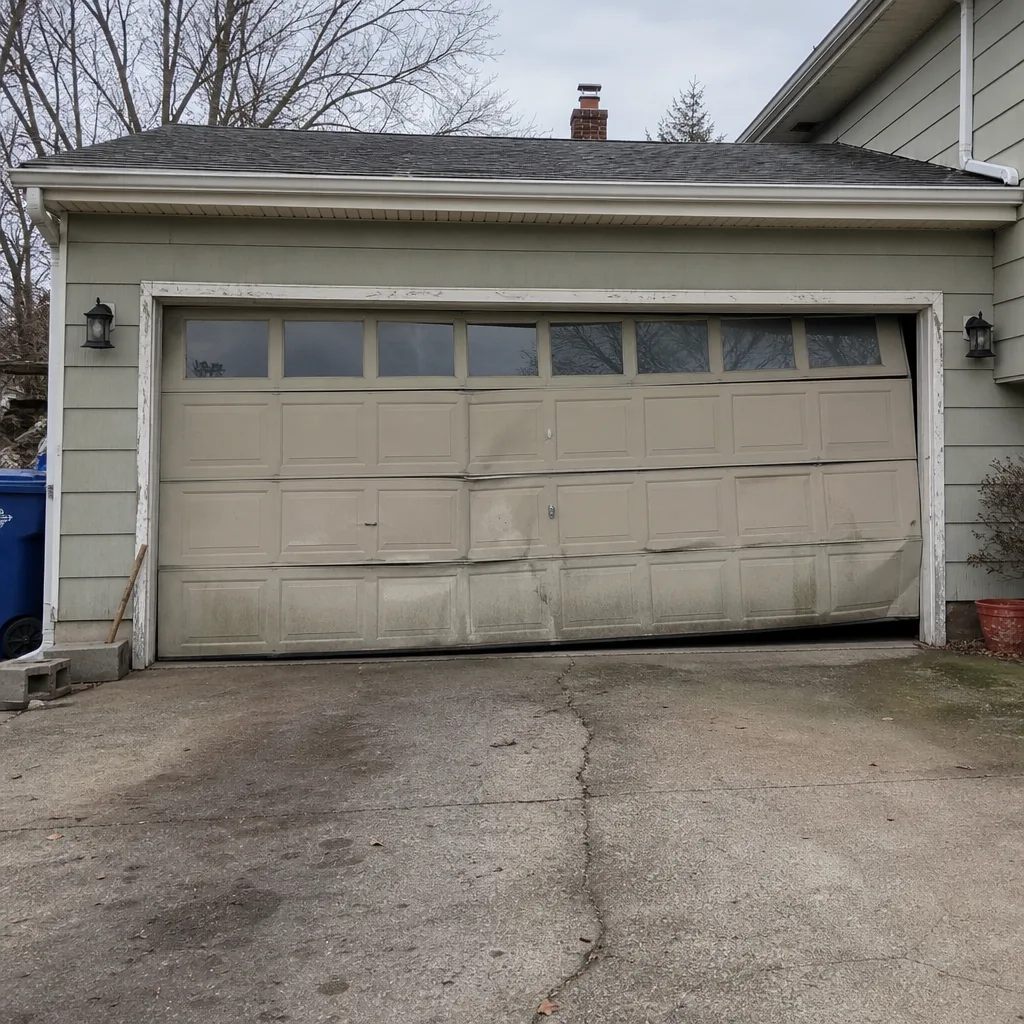 Before
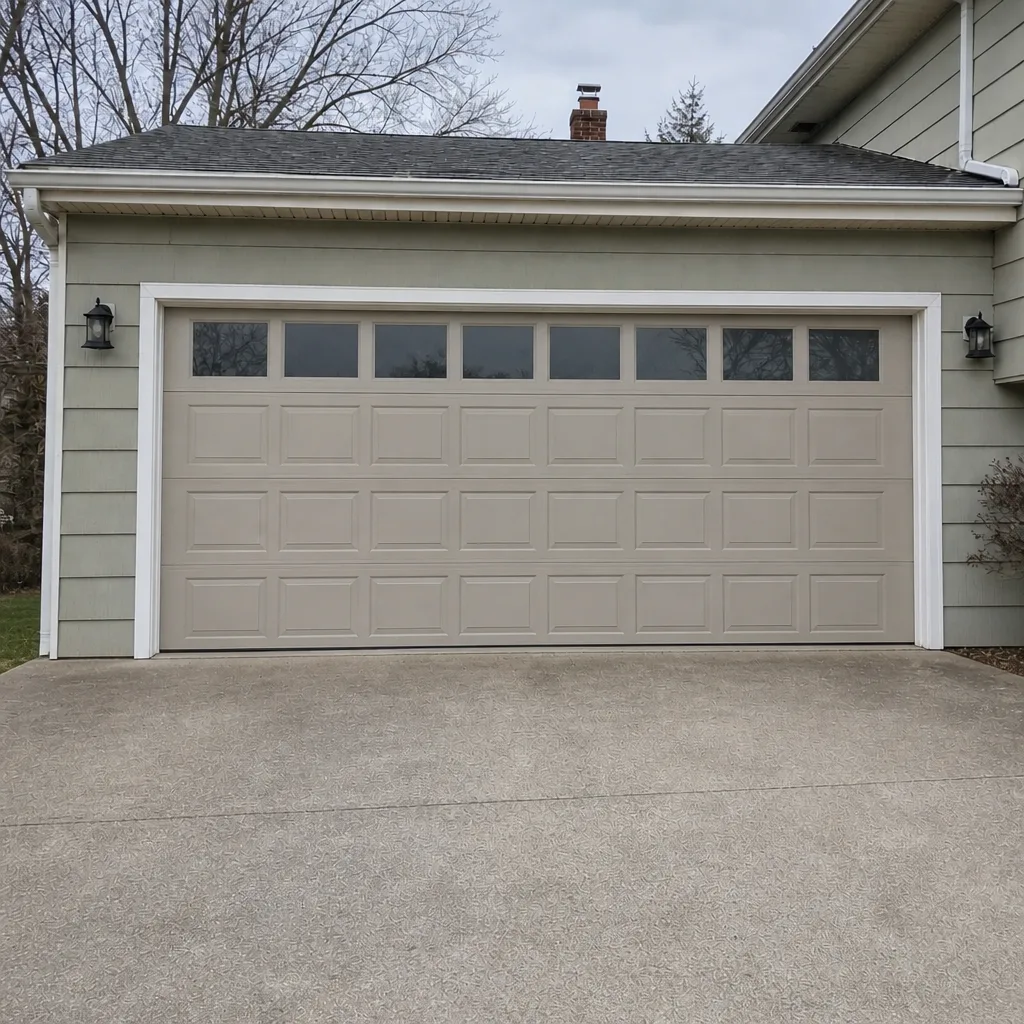 After
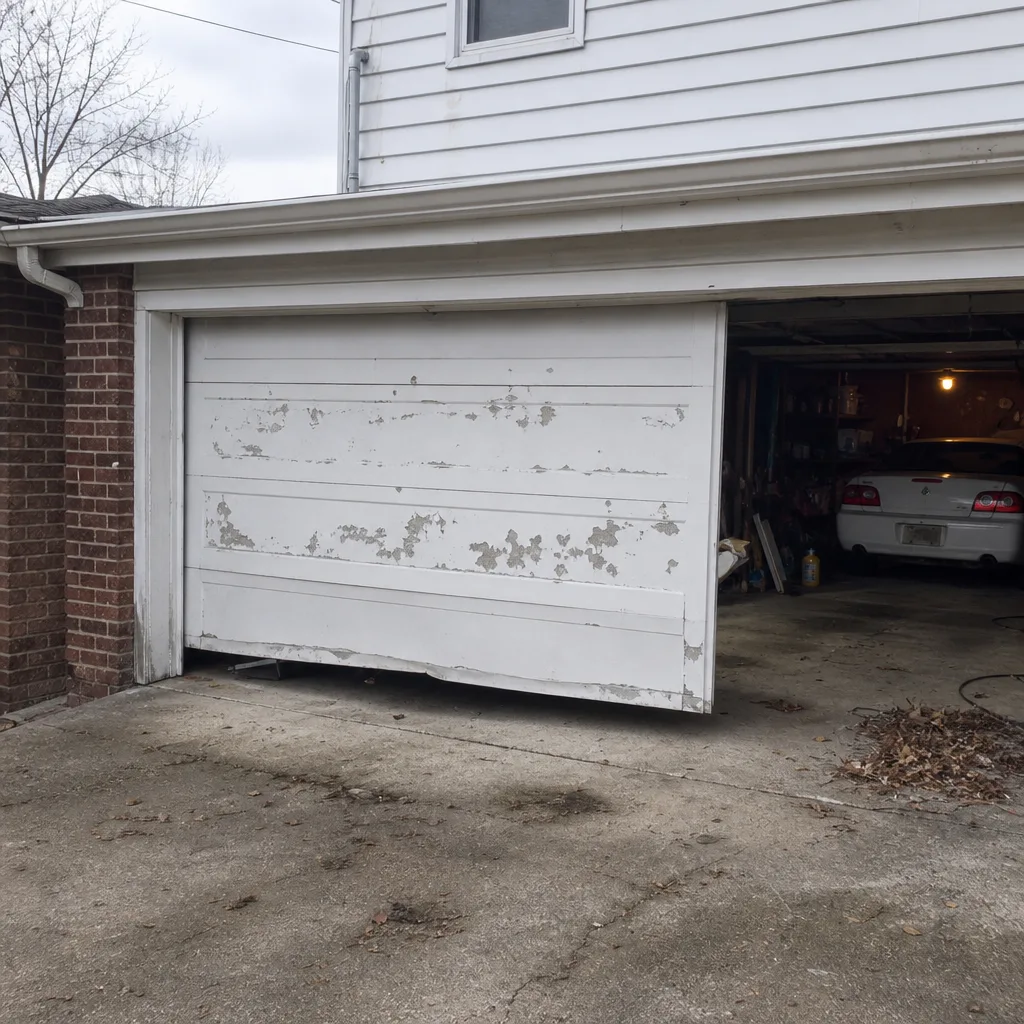 Before
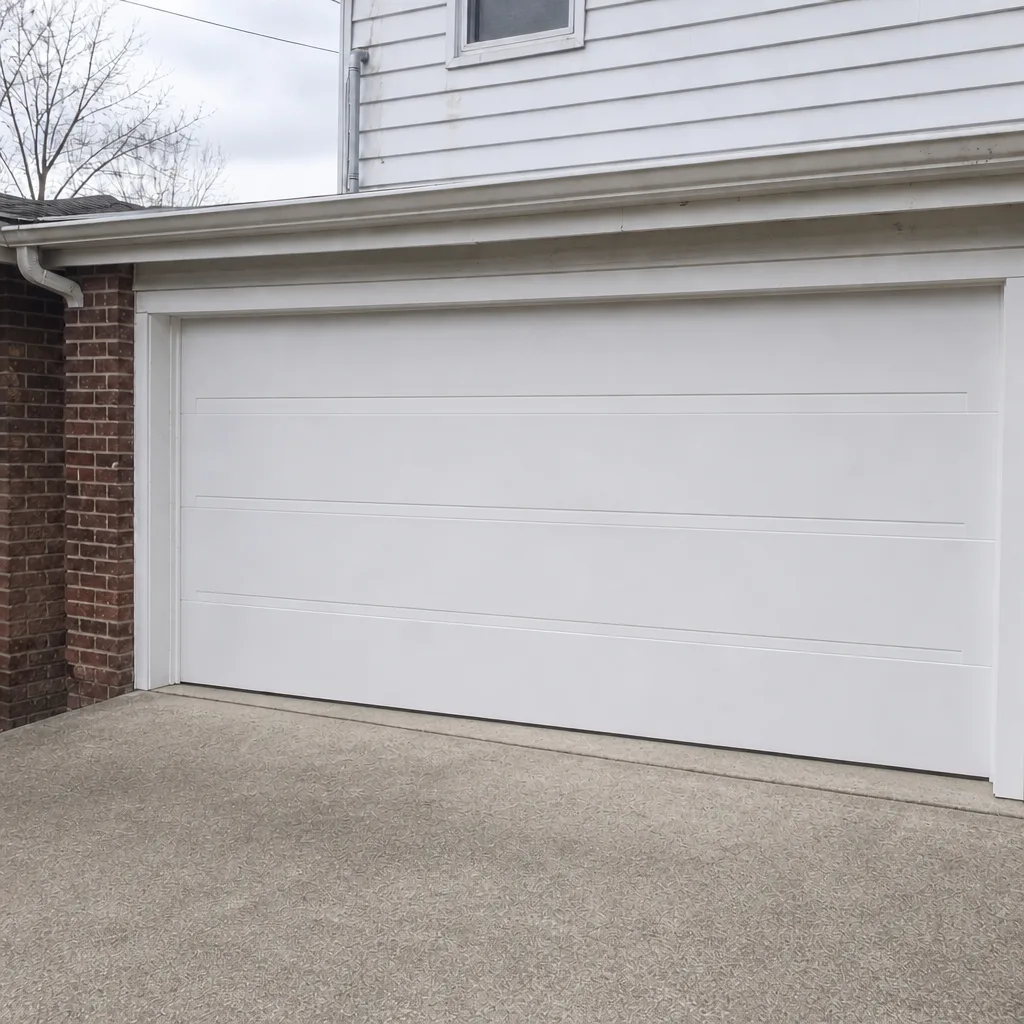 After
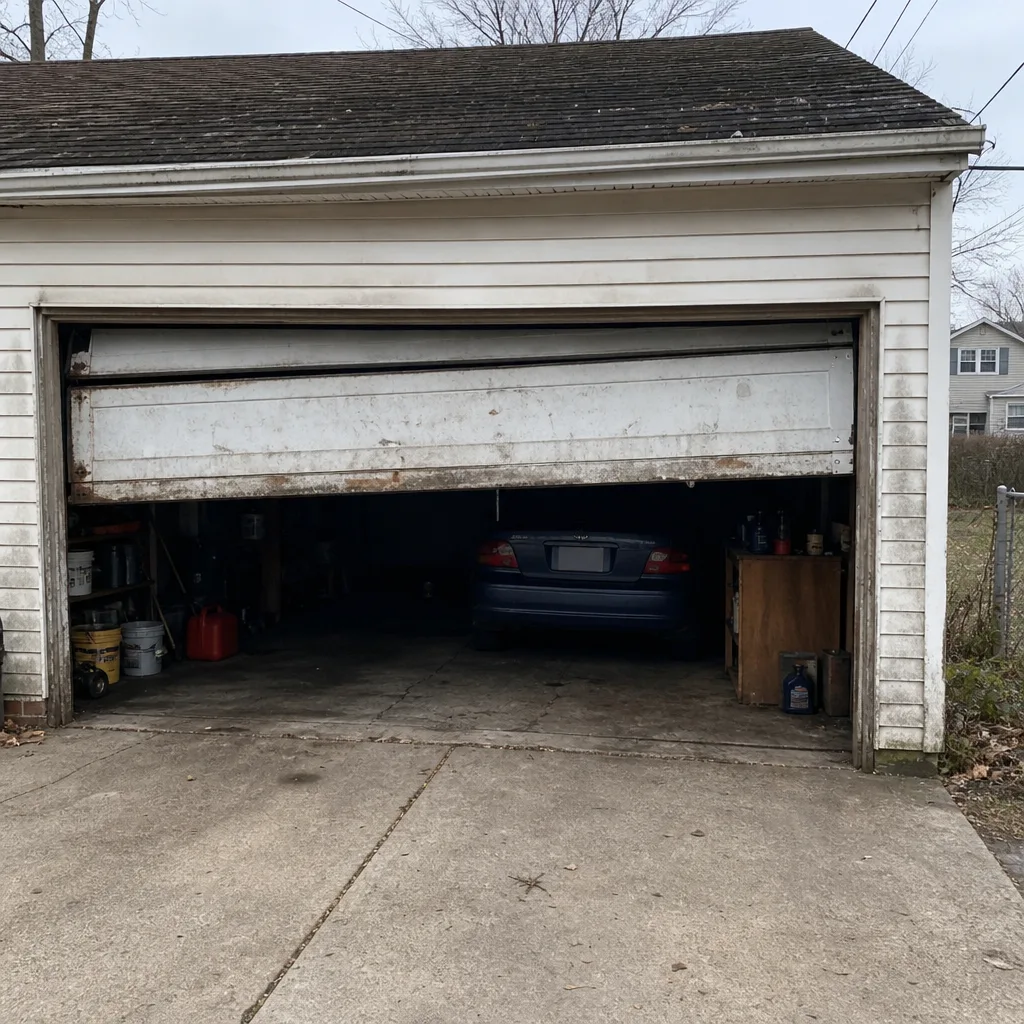 Before
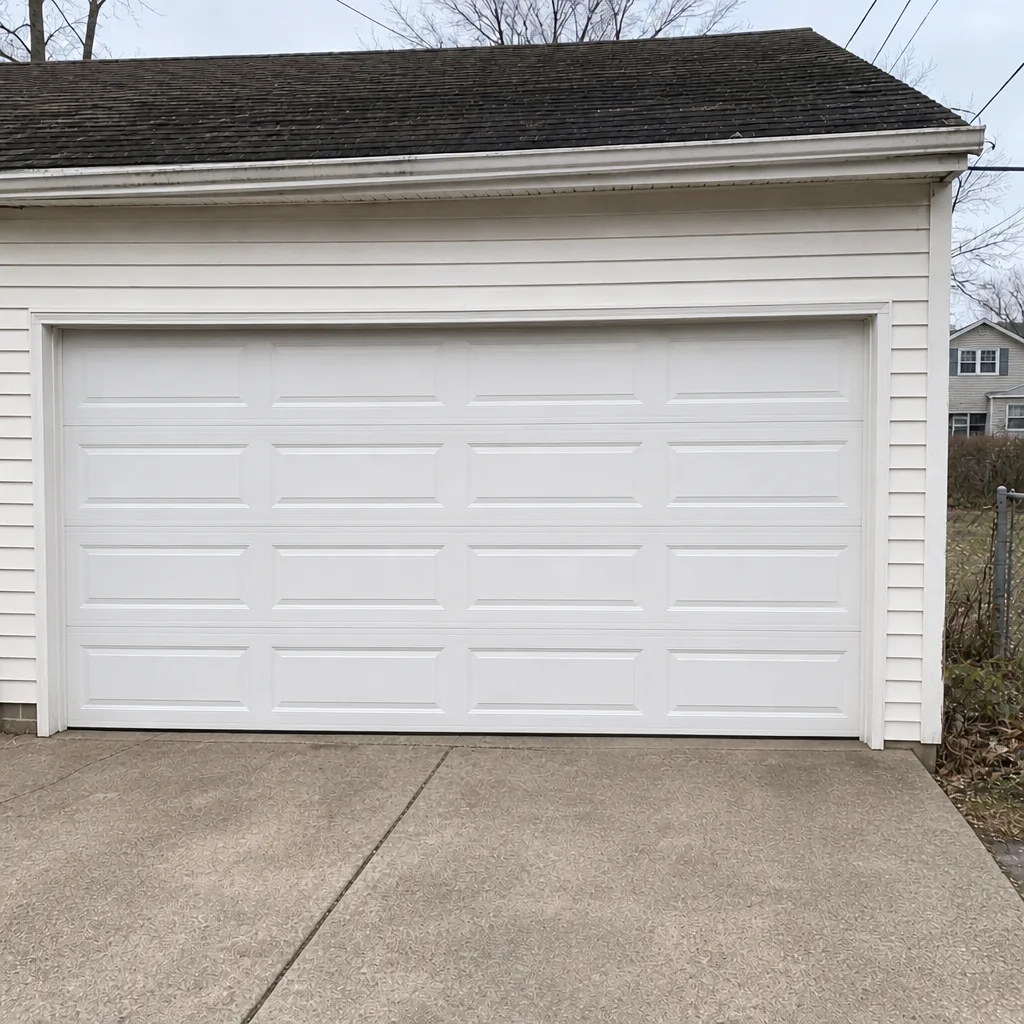 After
When to Call a Professional
Call a professional the moment a warning sign crosses from “noticed” to “safety concern” – a frayed cable, a bent track, a door hanging crooked, a pop followed by a non-lifting door, or any visual sign of structural damage. Call sooner rather than later if the door is your only vehicle access. Also call if you’ve noticed a specific new noise or tremor that hasn’t gone away after a week, even if the door still runs. Our technicians have up to 12 years of experience and every one of them works on garage doors only, not split across trades. New Brunswick Garage Door Repair Pros offers free estimates in New Brunswick – call (866) 937-8856. We answer 24/7. Fast dispatch from 7am to 7pm, Sunday through Friday. When the door won’t move, we move fast.
Frequently Asked Questions
A slight slowdown in opening speed. In our experience, that’s the first signal of declining torsion spring tension – the opener has to work harder to compensate, and the door feels a second or two slower than it used to. Most people write it off as “just cold weather” or “the opener getting old.” Get it checked before the spring fails outright. Call (866) 937-8856 for an exact quote – estimates are free.
Not always, but it’s always worth attention. Grinding usually comes from worn rollers, dry hinge pins, or a torsion tube that needs lubrication. Left alone, whichever part is grinding grinds harder and eventually takes other parts with it. Have it checked; the cause is usually fixable with a straightforward repair.
No. A frayed cable is a stop-use situation. The cable is under high tension and can snap without warning, and a snapped cable can let the door drop unexpectedly. Park the door and call for garage door repair before running it again. Call (866) 937-8856. We answer 24/7. A call outside dispatch hours is booked into the next opening, Sunday through Friday, 7am to 7pm.
It depends on the symptom. A motor that hesitates, a light that flashes a diagnostic pattern, or a door that reverses suddenly usually means the opener or its logic board needs service. A burned-out motor on an older unit, especially when the door is also showing structural wear, is often the point to talk about replacement. We’ll give you the honest version at the point of estimate. Call (866) 937-8856. Estimates are free.
Older homes and buildings across the city tend to see more hardware wear since their doors and hinge sets are that much further into their working life. Newer construction across New Brunswick is more likely to see opener capacity issues from doors that were paired with an opener right at the edge of its rated lift. Either way, the warning signs are the same: change in sound, change in speed, or visible wear.
Our goal on every visit is a fix, not just a diagnosis. To help make that happen, note the specific sound, the point in the cycle it happens, any weather link, and any visible wear before you call. That gives us a chance to arrive with the right parts and tools. If you know the brand of your door or opener – LiftMaster, Chamberlain, Genie, Clopay, Amarr, Wayne Dalton, Craftsman, or Raynor – tell us so we can bring the right hardware. Call (866) 937-8856. Estimates are free, and the price is quoted and agreed before any work starts.
The Bottom Line
Your garage door is describing its own condition to you every time it moves. Grinding, popping, and scraping tell you which component is under strain. Frayed cables, worn rollers, and panel gaps tell you what’s already failing. Opener hesitation, light codes, and reversing behavior tell you where the electrical system is working harder than it should. A slow door and an unsafe door aren’t the same thing, and telling them apart is the single most useful skill in this guide. Document the specific signs. Don’t force a door that’s told you it’s done. And when a warning sign comes up, treat the door like the diagnostic tool it is – then call someone who works on garage doors all day, on the brand already on your garage. If you’re in New Brunswick and something about your door has changed, New Brunswick Garage Door Repair Pros can take a look.
Call (866) 937-8856 for a free estimate. We answer 24/7. Fast dispatch from 7am to 7pm, Sunday through Friday.
Written by the team at New Brunswick Garage Door Repair Pros.